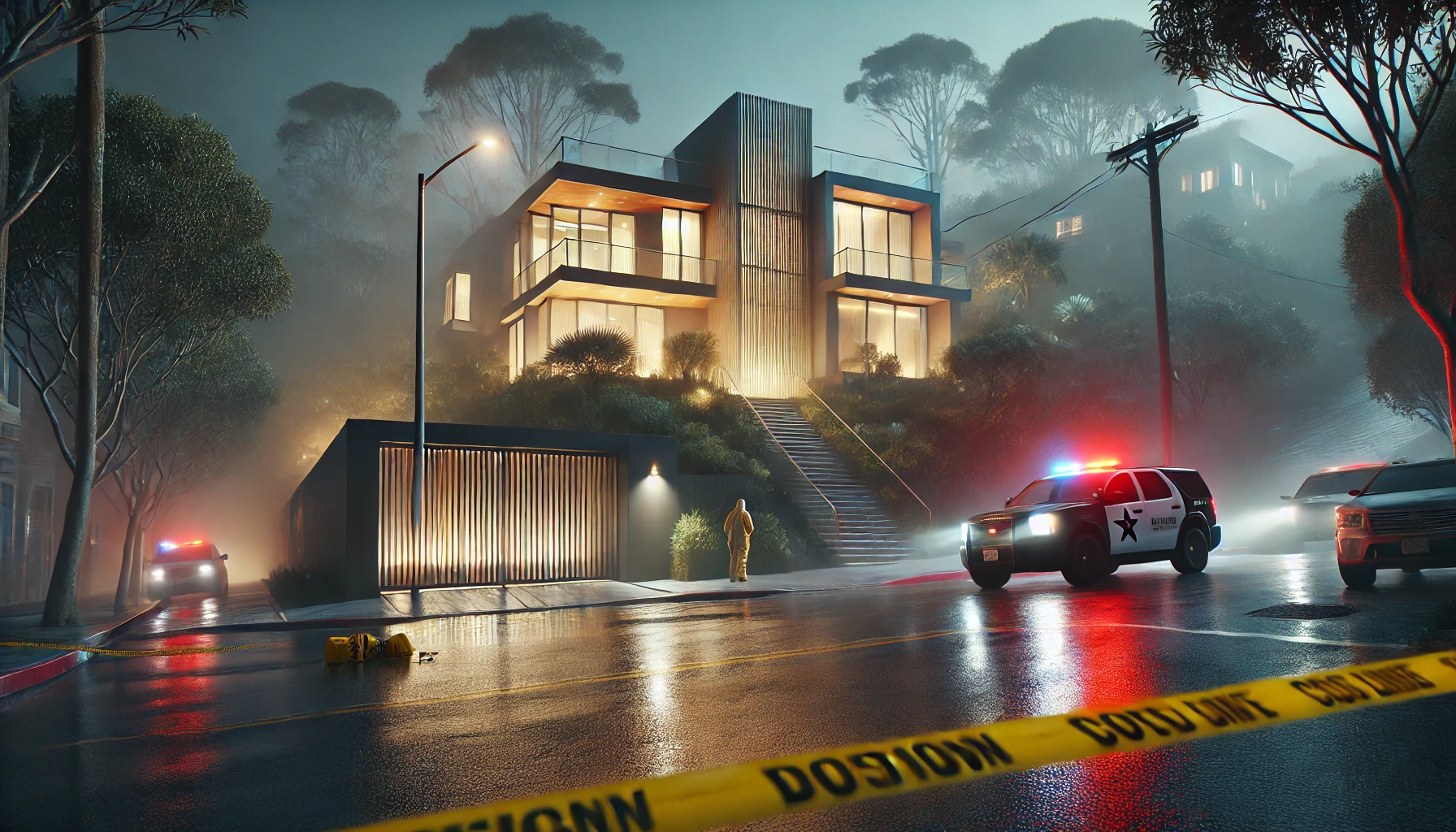
Police presence outside a luxury hillside residence in San Francisco following a nighttime security incident.
Sam Altman’s San Francisco home was hit by a Molotov cocktail on April 10 and a drive-by shooting on April 12. Three suspects have been arrested across the two incidents, which are not believed to be connected. Together they represent the most direct escalation of anti-AI sentiment into physical violence that the industry has faced and forced a question the field has largely deferred: as public opposition hardens, how far will a minority of that opposition go?
Why It Matters
The first attack came at 3:40 a.m. on April 10. Daniel Alejandro Moreno-Gama, 20, from Spring, Texas, threw a Molotov cocktail at the metal gate of Altman’s Russian Hill property. Security extinguished the device. Two hours later, Moreno-Gama was arrested near OpenAI’s Mission Bay headquarters carrying a jug he claimed contained kerosene. He faces charges including attempted murder, arson of an inhabited structure, and possession of a destructive device. His online footprint was explicit: he used the Discord screenname “Butlerian Jihadist” – a reference to Frank Herbert’s fictional war against thinking machines – and posted to the PauseAI server in December 2025: “We are close to midnight, it’s time to actually act.” The second attack followed on April 12 at 1:40 a.m., when two suspects in a Honda sedan fired a single round at the property. Amanda Tom, 25, and Muhamad Tarik Hussein, 23, were arrested shortly after; three firearms were seized from a separate address. The FBI has confirmed it is working alongside the SFPD on the investigation.
These incidents do not exist in isolation. On April 7, Indianapolis city councilor Ron Gibson – who had opposed new data center ordinances – had thirteen shots fired at his home with a note reading “NO DATA CENTERS.” Polling released this month shows 80% of Americans are concerned about AI, 55% believe it causes more harm than good, and 65% oppose data centers in their communities. Against that backdrop, researchers studying AI ethics and online radicalization have begun documenting a direct pipeline from doom-focused AI communities to normalized extreme action. PauseAI formally distanced itself from Moreno-Gama, stating he had no formal role and attended no events. Altman published a rare personal statement on April 10 acknowledging that fear about AI is “justified” while calling for de-escalation, “literally and figuratively.”
What’s Next
Several major AI labs are reviewing executive security protocols following the attacks. Whether these incidents represent isolated extremism or a leading indicator will depend partly on how seriously companies and law enforcement treat the online radicalization dimension alongside the physical threat. The harder structural problem is that AI is the fastest-growing technology in history while simultaneously becoming, according to Stanford’s newly released 2026 AI Index, the least transparent: 80 of 95 notable models launched in 2025 without publishing training code. The communication gap between developers and a skeptical public – one that polling now shows holds majority negative views – has grown to a size that security protocols alone cannot close.
The industry faces a dual obligation: protect people, and explain itself. Neither is optional.
Sources: SF Standard · CNBC · Mission Local · The Decoder
About the Author