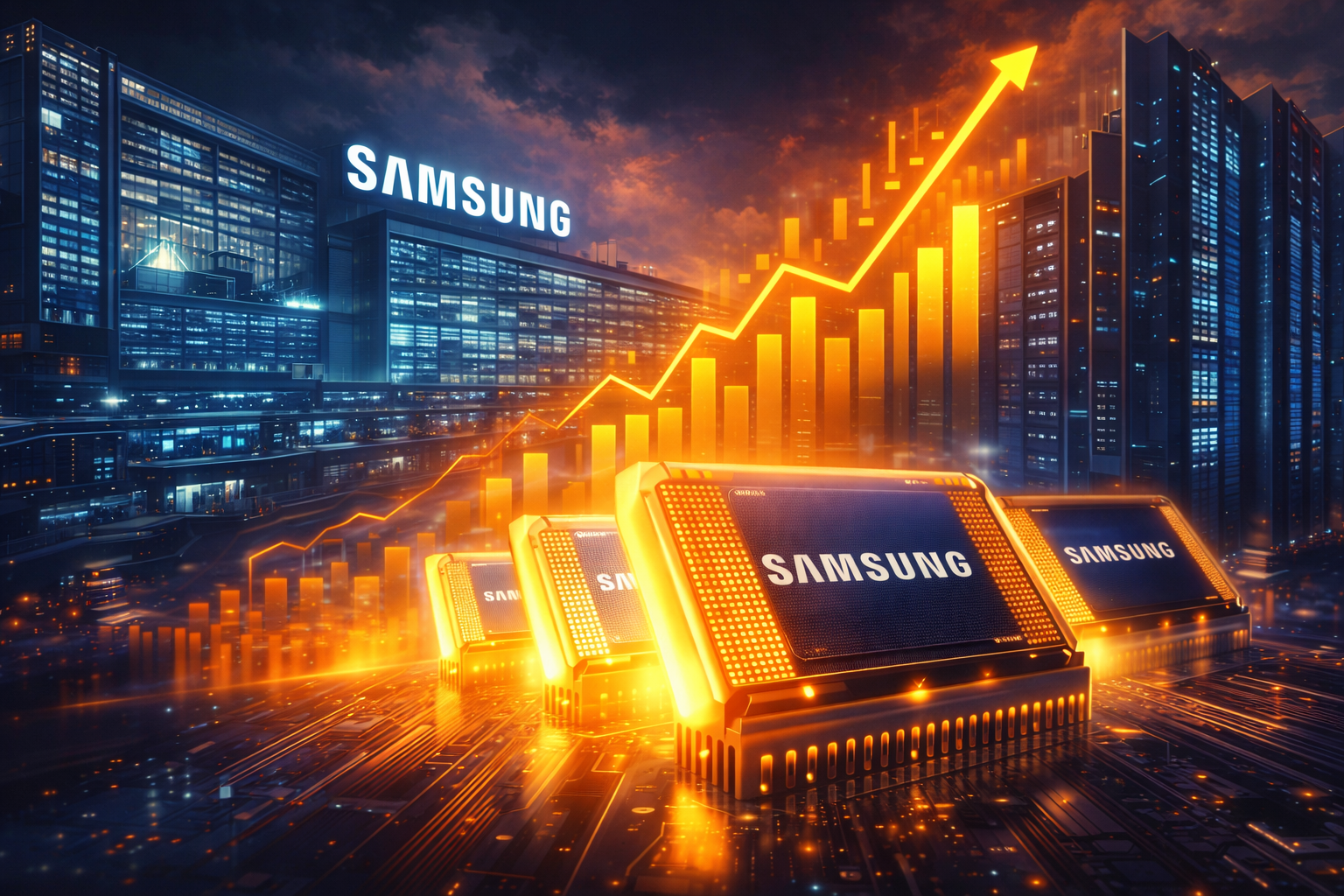
Editorial illustration showing Samsung’s record Q1 2026 profit surge, driven by booming HBM memory chip demand, hyperscale AI data centers, and the accelerating AI infrastructure race.
Samsung Electronics posted an operating profit of $37.9 billion for Q1 2026, an eightfold increase year-over-year and the largest single-quarter result in the company’s 87-year history. The figure exceeded Samsung’s entire 2025 annual profit in a single quarter.
The preliminary guidance, released April 7, revealed revenue of approximately $88 billion – up 68% from the same period last year. The result beat analyst consensus by nearly 41%, with most forecasts clustered around $26–28 billion.
Why It Matters
About 95% of Samsung’s Q1 profit came from its semiconductor division, driven almost entirely by high-bandwidth memory chips for AI data centers. HBM shortages pushed DRAM contract prices to near-record highs during the quarter, and TrendForce projects a further 50% rise in Q2. SK Hynix shares climbed 3.4% on the day of Samsung’s announcement – a sign that investors read the results as a sector-wide signal, not a company-specific one.
Samsung also confirmed it began commercial shipments of sixth-generation HBM4 chips in February 2026, closing the competitive gap with SK Hynix that had been a recurring concern through 2025. According to Counterpoint Research analyst MS Hwang, Samsung’s Q1 revenue and profit have reached a scale that rivals global Big Tech peers – a threshold no memory chipmaker has previously crossed.
The results reframe a core assumption about the AI economy. GPU designers like Nvidia have dominated the AI investment narrative, but Samsung’s numbers make clear that memory is now an equally critical – and equally lucrative – layer of the AI infrastructure stack.
What’s Next
Samsung’s full Q1 earnings breakdown with divisional detail is expected April 30. Analysts at Heungkuk Securities project the company could reach $50 billion in operating profit in Q2 2026 if current pricing holds. Samsung stock is up more than 60% year-to-date, following a 125% gain in 2025.
One risk worth monitoring: potential helium supply disruption tied to Middle East tensions could affect chipmaking materials across the industry. Samsung’s mobile division contributed only about $4 billion to Q1 profit – less than 5% of the total – while its logic chip operations posted a $1.6 billion loss, underscoring how completely the AI business now defines the company’s financial trajectory.
For the semiconductor industry broadly, the Q1 results are the clearest financial evidence yet that the AI memory supercycle is accelerating rather than plateauing. The question heading into Q2 is whether demand can continue to outpace the capacity additions that Samsung and its rivals are racing to bring online.
Sources: CNBC · Bloomberg · Reuters · Quartz
About the Author